

The Birkman Method.
You know what people do. But do you know what drives it?
Maybe you have a leader who believes they're communicating clearly while their team experiences something entirely different.
Two strong performers may repeatedly clash, not because either is ineffective, but because what each needs and expects from the other may be creating tension neither of them fully understands.
Your highest-performing team may be successful for reasons no one has actually identified yet.
Or maybe you're trying to learn why certain environments bring out your best while others completely drain you.
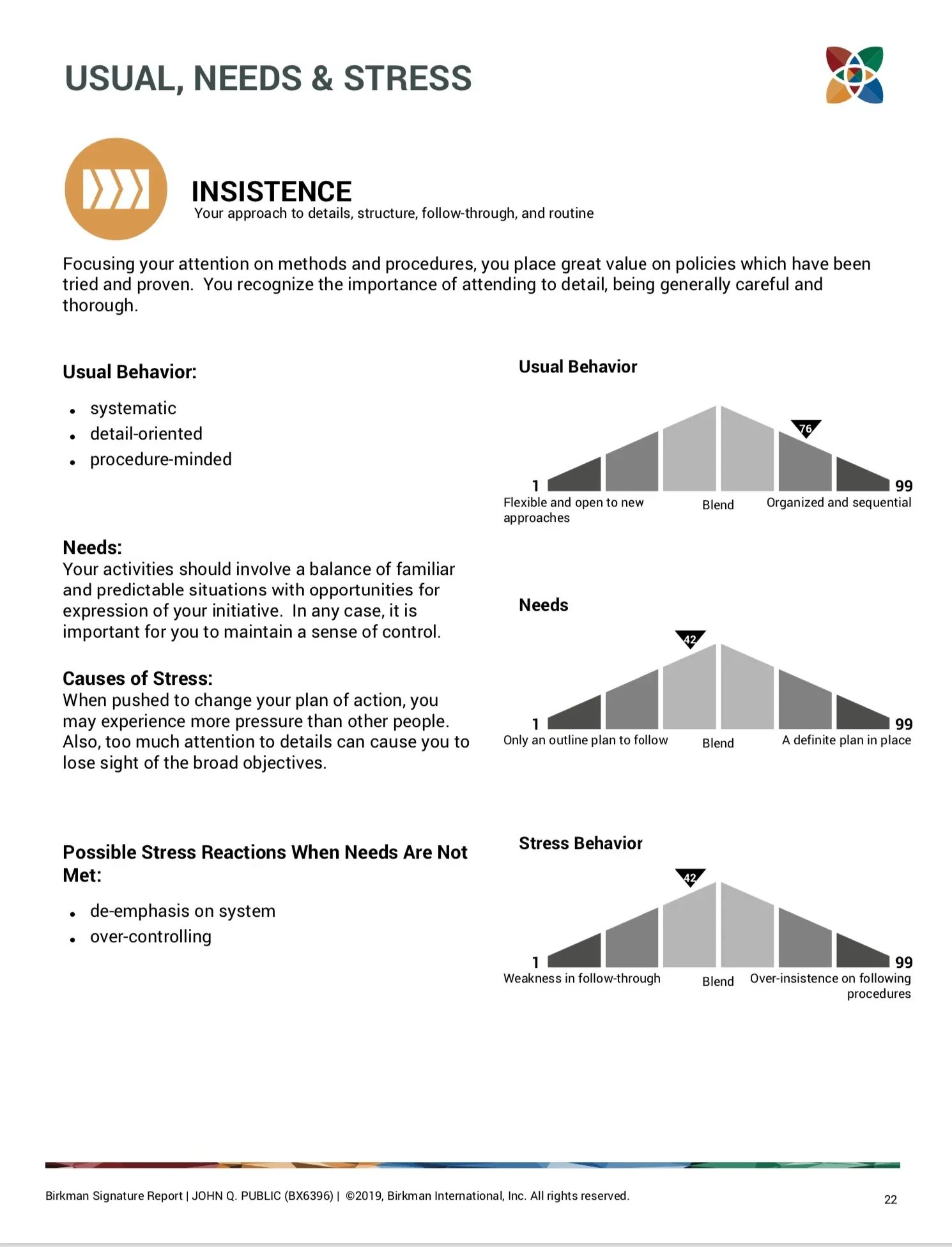
The Birkman Method® helps us look beneath observable behavior to better understand what motivates people, what they need from their environment and others, where their natural interests lie, and how their behavior may shift when those needs aren't being met.
Rather than simply describing what type of person you are, Birkman gives us something much more useful: context for understanding how you operate.
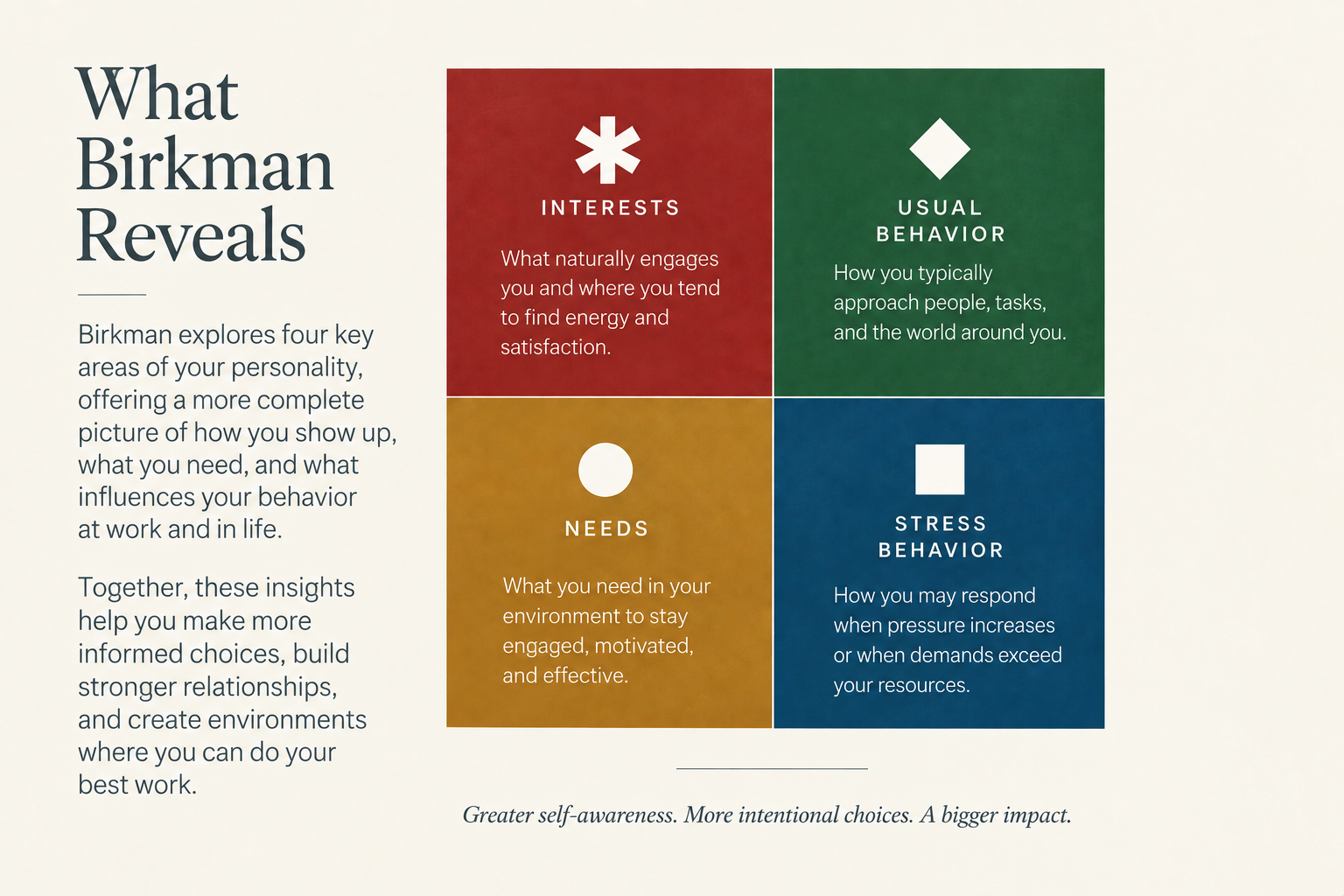
And that’s only the beginning.
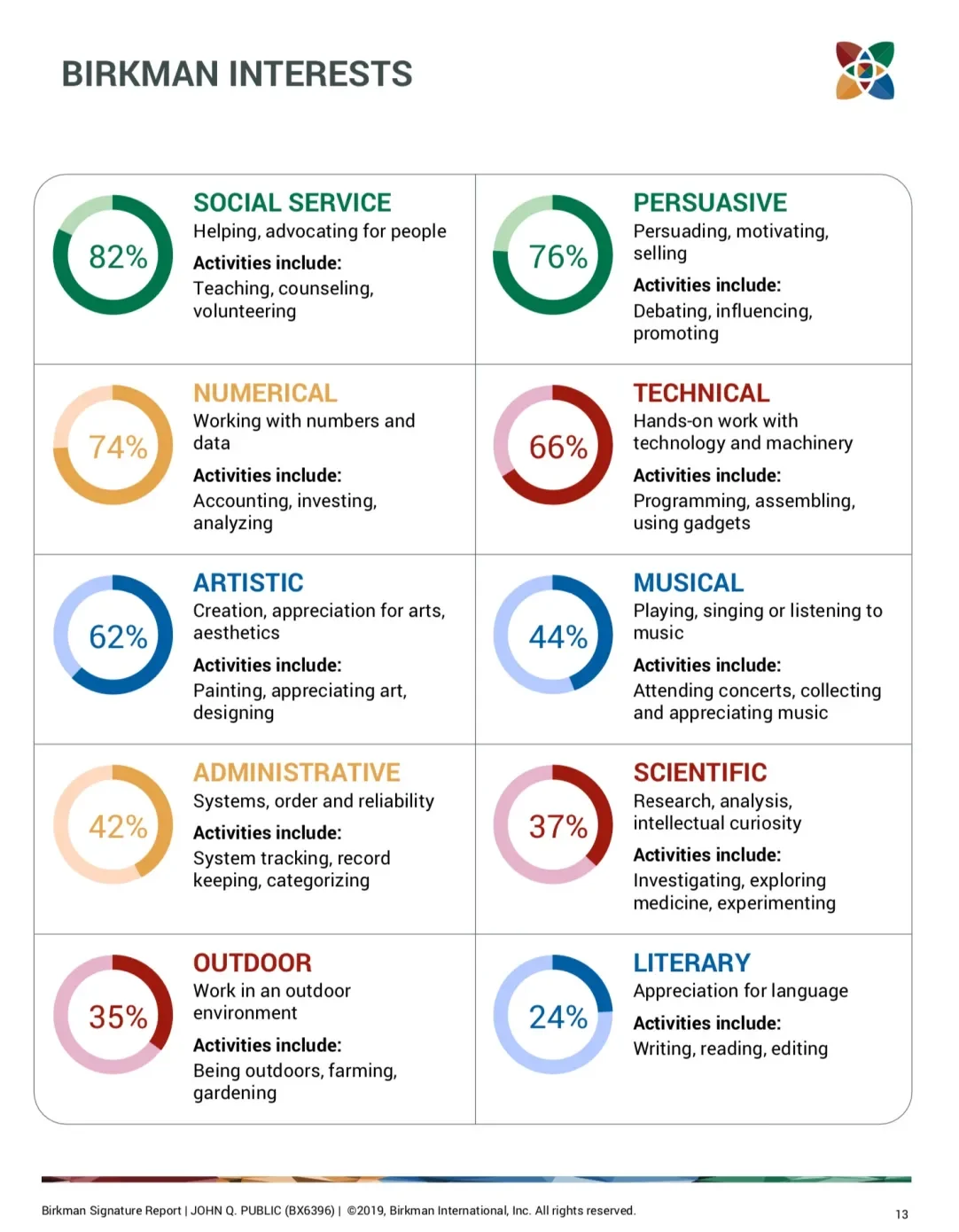
The Birkman Signature Report goes far beyond these four foundational areas, uncovering more nuanced patterns in how you communicate, relate to others, approach work, make decisions, respond to expectations, and navigate the environments around you. But the real value isn't in how much information the assessment gives us. It's in what we can do with it.
The Birkman Method is a scientifically developed organizational assessment used by individuals, leaders and organizations around the world. Then learn more about The Birkman Method directly from Birkman.
What Can We Actually Do With This?
For Individuals
Understand why you can be perfectly capable in a role and still feel depleted by it.
See the difference between how you naturally behave and what you actually need from the people and environments around you.
Recognize what happens to your behavior when those needs go unmet.
Put language around patterns you've probably noticed for years but haven't necessarily known how to explain.
Identify habits or default behaviors you may want to challenge, strengthen, or approach differently.
For Leaders
Understand the gap between your intention and other people's experience of you.
Identify the conditions that help you operate effectively—and the ones more likely to push you into less productive patterns.
Understand why the way you prefer to communicate, make decisions, delegate, structure work, or handle conflict may not work equally well for everyone you lead.
Recognize where your natural leadership tendencies are helping you and where they may be getting in your way.
Use that insight to make more intentional choices about how you lead different people and situations.
One person’s results can tell us a lot. But when we look across an entire team, another picture begins to emerge. We can see where patterns cluster, where they diverge, what may be strongly represented across the group, and what may be less represented. We can explore how people’s needs, communication styles, decision-making tendencies, and approaches to work interact, not just person by person, but across the team as a whole.
That broader view can help explain why a team works the way it does, where friction may be coming from, where blind spots may exist, and what might be contributing to the group’s effectiveness.
The same traits driving a team’s success may also be contributing to its friction.
For Teams + Organizations
Understand why people can experience the same workplace, expectations, or situations very differently.
Identify patterns in how people communicate, make decisions, collaborate, respond to pressure, and approach their work.
See what different team members need in order to perform effectively and where those needs may complement or conflict with one another.
Uncover hidden patterns that may be contributing to recurring friction, communication breakdowns, or stalled collaboration.
Identify strengths within a team that may be contributing to its success even when no one has been able to name exactly why it's working.
The Birkman Experience at The Consulting Firm

Part 1: Assessment
You’ll start by completing TCF’s Context & Impact Profile, followed by the Birkman Assessment. The profile gives us a better understanding of your role, environment, goals, and what brings you to Birkman, while the assessment gives us a deeper look at how you work, what motivates you, what you need, and how those patterns may change under stress.

Before your debrief, we learn more about the role, environment, goals, challenges, and systems surrounding your work. We use that context alongside your Birkman results so the conversation is grounded in your actual life and work—not a generic personality profile. For organizational engagements, we broaden that lens to consider the team and system in which those patterns are operating.
WHY WE ASK FOR CONTEXT
Your results tell us a lot, but your context tells us what to do with them.

Part 2: Interpretation
Next, we’ll meet for a 60-minute guided debrief of your results. We’ll walk through what they mean, explore what stands out or surprises you, and look more closely at the patterns that help explain how you operate and experience the people and environments around you.

Part 3: Application
From there, we’ll connect what you’ve learned to what’s actually happening in your life and work. We’ll look at where your patterns may be helping you, where they may be getting in your way, and what they could mean for the goals, relationships, challenges, or changes you’re navigating. For organizational engagements, we’ll also examine how individual patterns come together across the team and what those dynamics may mean for how the group works together.

Part 4: Integration
Finally, we’ll identify what you want to do differently with what you’ve learned. That may mean communicating differently, challenging a familiar habit, adjusting how you lead or work with others, building on an existing strength, or experimenting with a new approach. The goal is to leave with insight you can actually put to use.
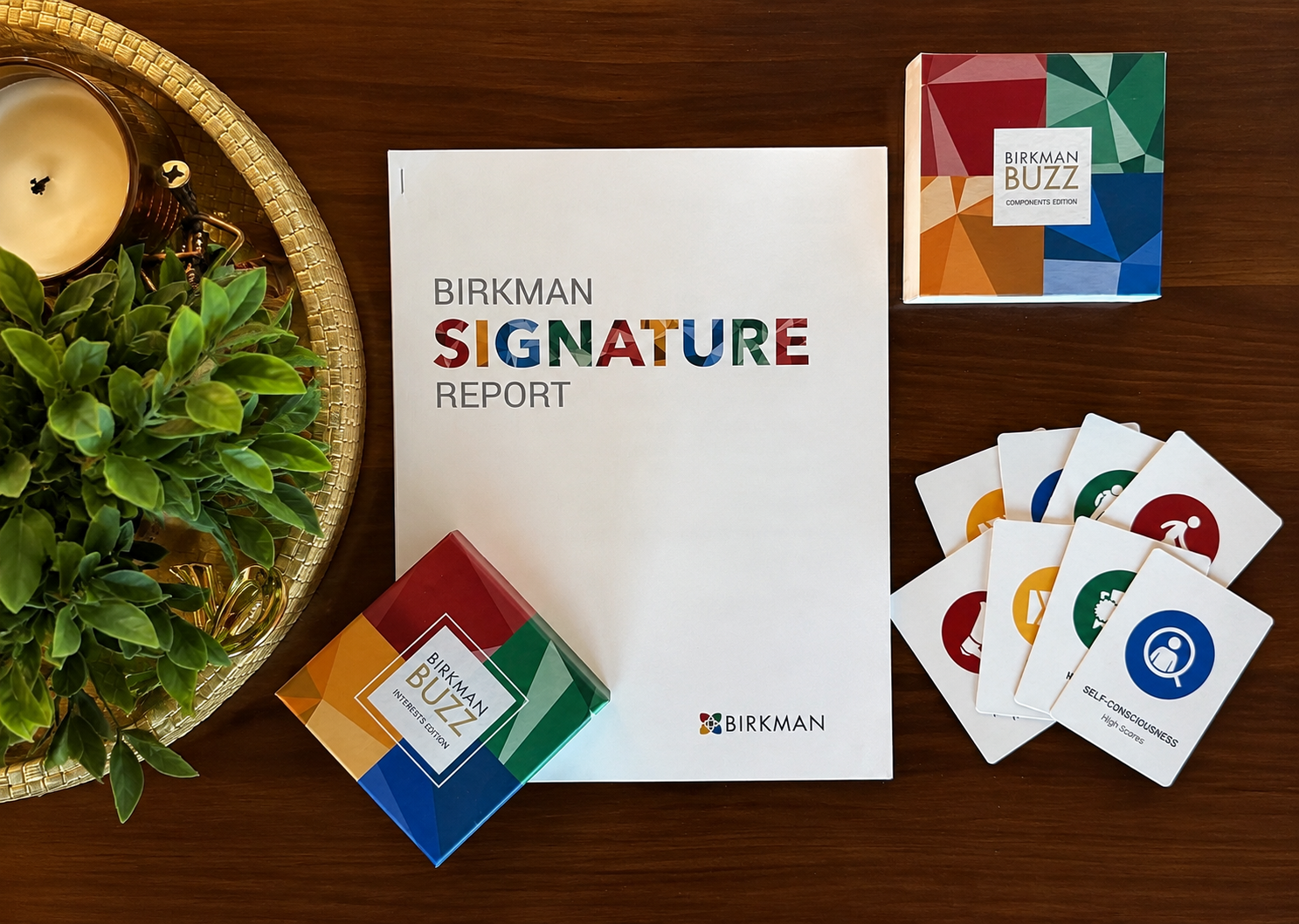
Ways We Use Birkman
INDIVIDUAL
Self-awareness
Career + role alignment
Communication
Relationships
Stress patterns
Behavior change + development
TEAMS
Team dynamics
Working relationships
Communication patterns
Conflict + friction
Team strengths + blind spots
Collaboration
LEADERSHIP
Leadership style + impact
Communication
Decision-making
Delegation
Managing different needs
Leadership development
ORGANIZATION
Talent development
Selection + role alignment
Leadership development
Team effectiveness
Culture + change
Organizational performance
Understand the person. Understand the context. Change the impact.
Now let’s put Birkman to work.
Whether you’re exploring Birkman for yourself, a leader, a team, or your organization, we’ll start with an initial consultation to learn more about what brings you here, answer your questions, discuss the details, and begin the process.